Sailes Charter Identity

Brand identity and website for a family-run sailing charter · 4 min read
Challenge
A family-run charter company with 12 years of reputation had no way to reach new clients online. The outdated site couldn't present destinations, build trust, or convert visitors into first contact.
Role
Solo designer end-to-end: stakeholder interviews, information architecture and UI design.
Research Brand Identity UI Design
Impact
Became the company's primary channel for new client discovery and first contact.
Duration
4 months
Sailes Charter Identity

Discovery

Through stakeholder interviews I mapped two key audience groups: new clients needed the website to build trust; loyal repeat clients relied on direct contact instead. Closing that gap shaped the strategy.
  • Most first-time clients ask the same questions before booking - what's included, what experience is needed, and how to get there.
  • The owner's local knowledge - the reason repeat clients stay - was invisible to anyone discovering the business online.

Competitive Benchmark

Benchmarked two established charter platforms to find where Yachtilius could stand out.
Platform Trust Signals Search & Booking Educational Content Personal Touch Destination Context
Yachtic.com
YachtBooker.pl
Yachtilius
Scroll to explore
Both platforms optimize for volume. The opening was clear: lean into what they can't offer - a personal, curated experience built on local knowledge.

Design Principles

Based on research findings, three principles guided every design decision:
Show, don’t tell
Let destination imagery and sailing routes sell the experience - minimize text-heavy descriptions in favor of visual browsing.
Personal over transactional
Every page should feel like a conversation with the owner - local tips, curated picks, and a human voice.
Answer before they ask
Surface the most common questions (safety, pricing, experience) proactively so the site builds trust without requiring a call.

Information Architecture

The structure follows three user goals: browse destinations visually, understand what a trip involves, and find support info (terms, safety, contact) before reaching out.
Home
Destinations
Croatia Greece Turkey Italy Spain
Trip Types
Family Sailing Corporate Sailing Catamarans
Support
About Us Contact Find a Yacht
Scroll to explore
Site map

Wireframes

Focused on mobile-first layouts to validate hierarchy and navigation flow before visual design.
Landing Page
Hero, search, and destination tiles as the main entry point
Destination
Country overview with tour cards and contact CTA
Tour Route
Map view with day-by-day sailing itinerary
FAQ
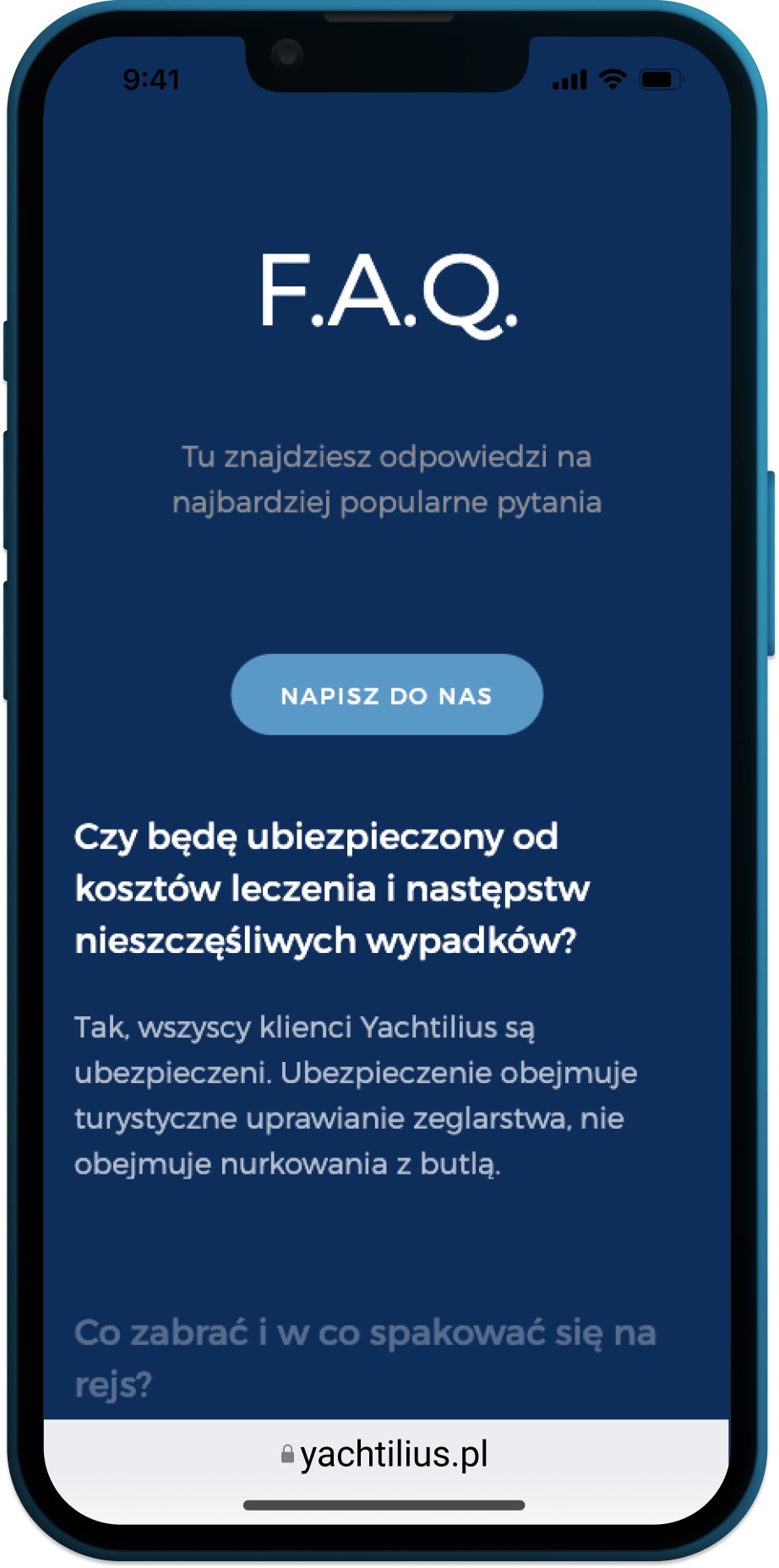
Expandable questions to reduce repetitive client questions
Scroll to explore
Early wireframes for landing, destination, route, and FAQ

Landing Page

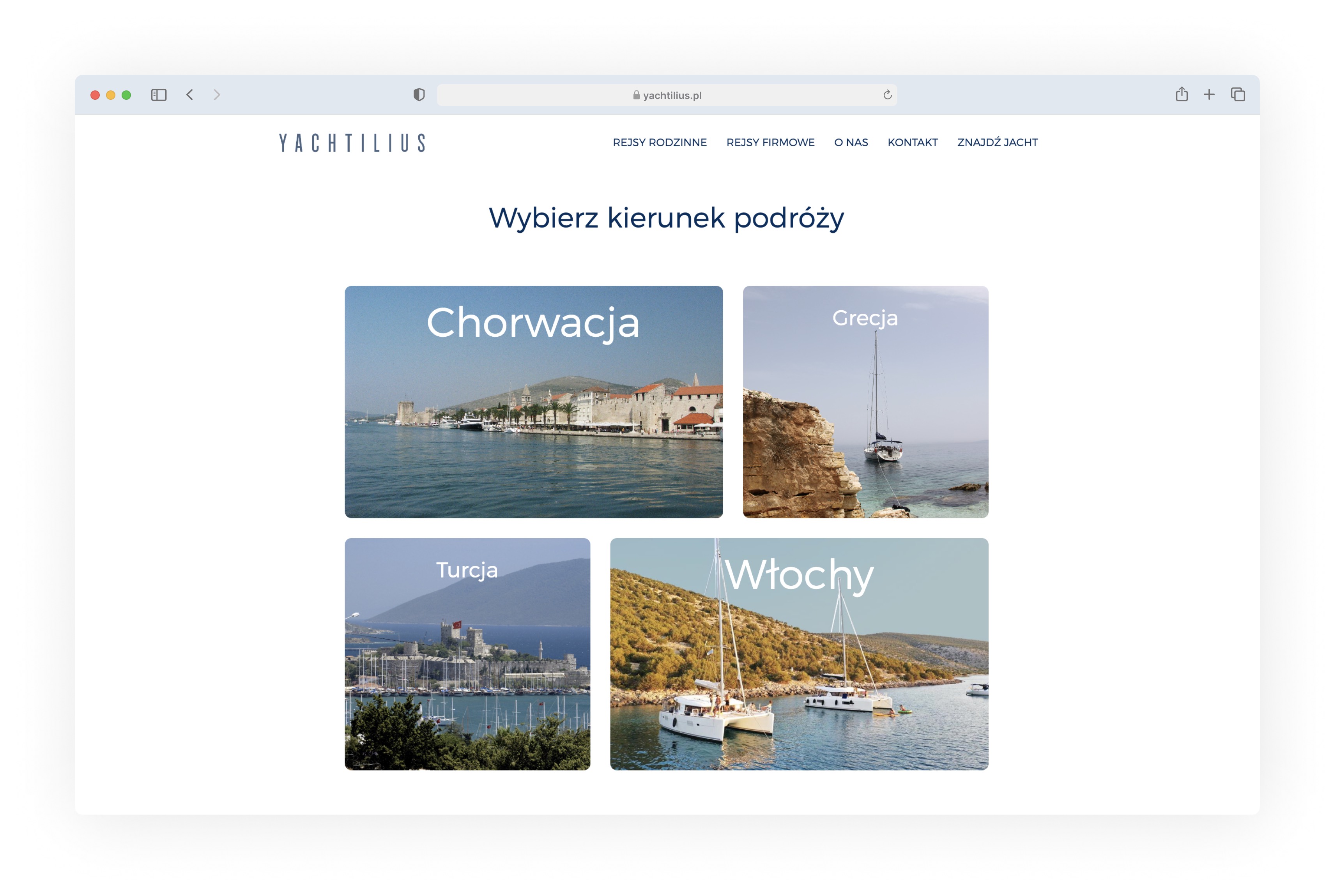
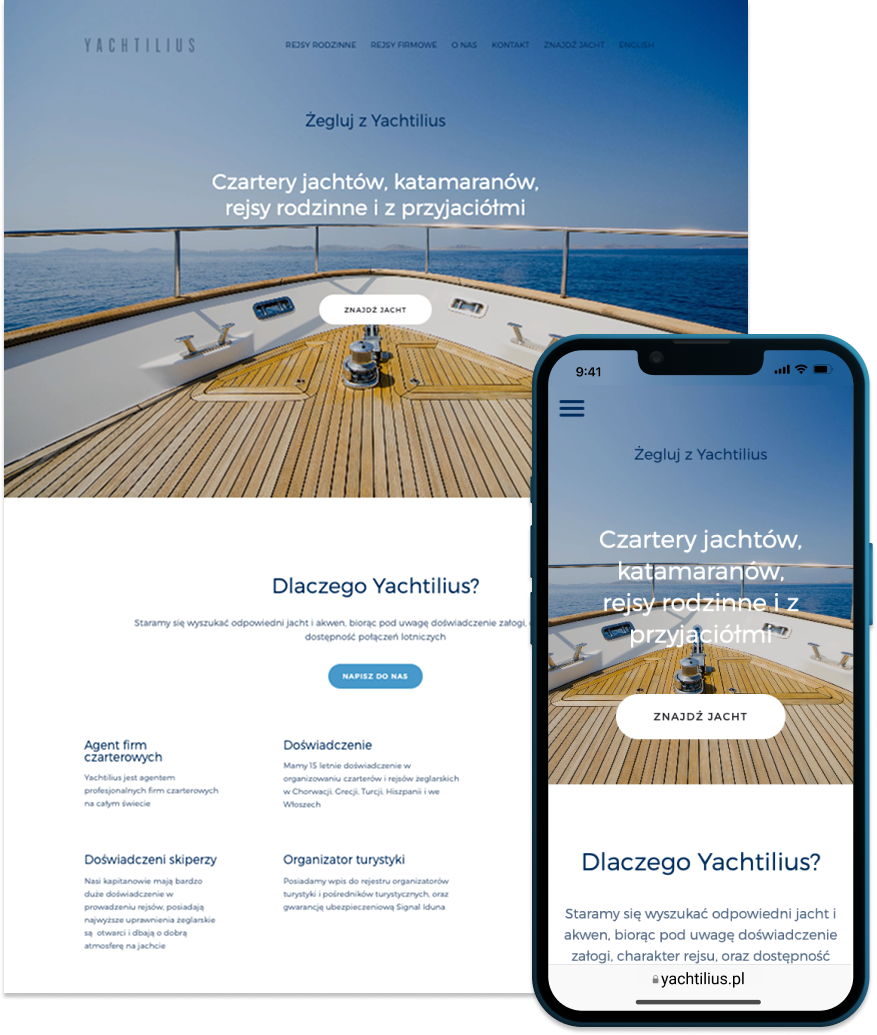
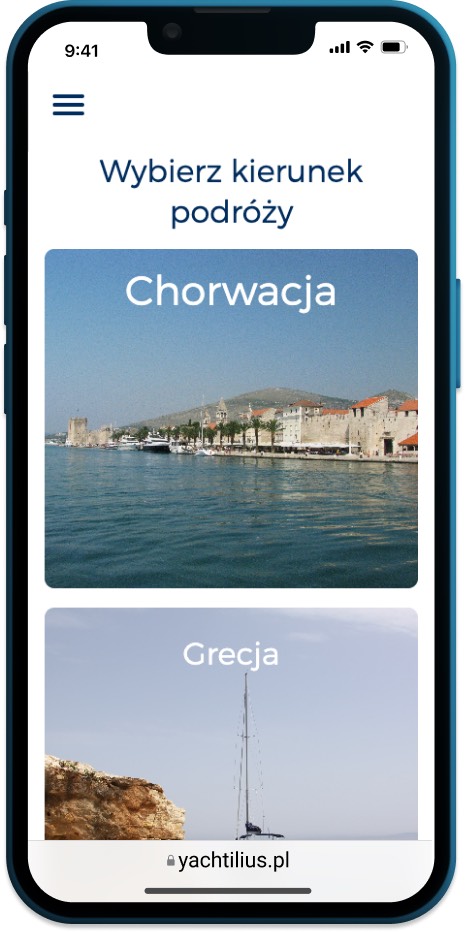
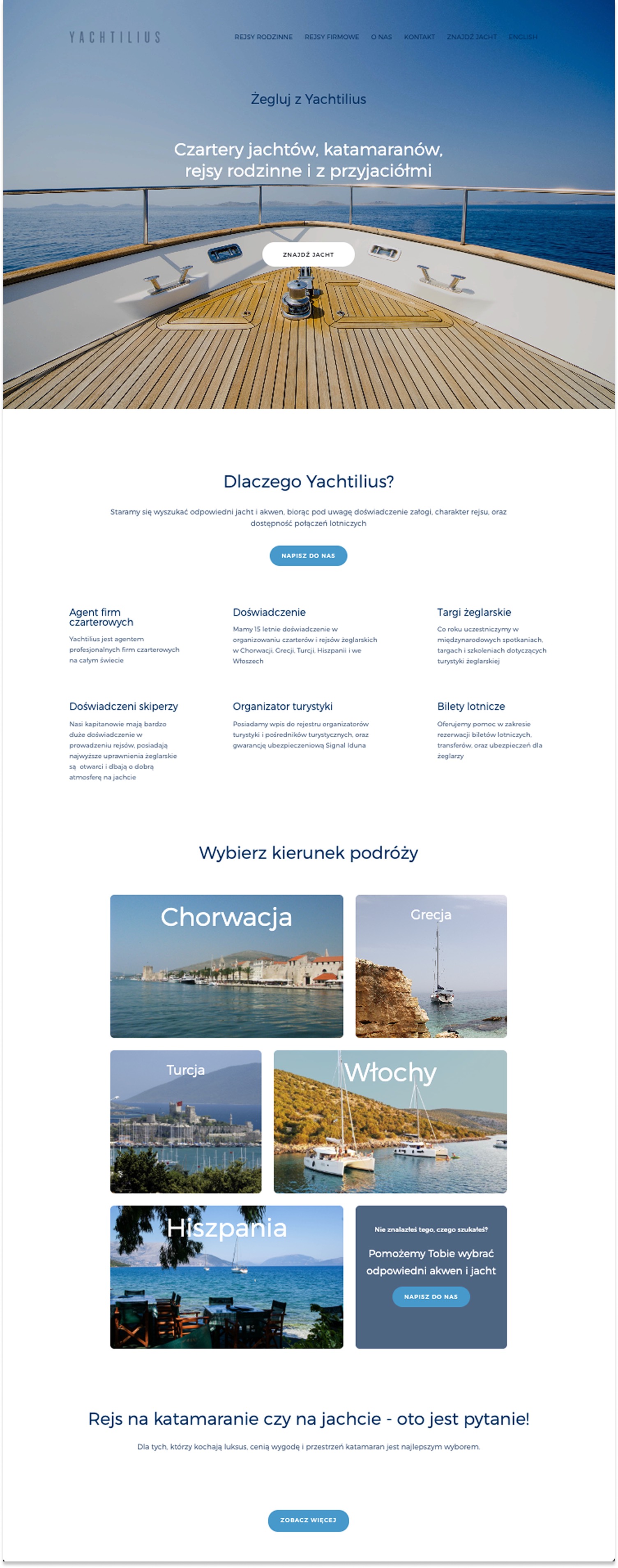
Tile-based navigation over a traditional list - charter clients browse visually. Large imagery and short descriptions do the selling.
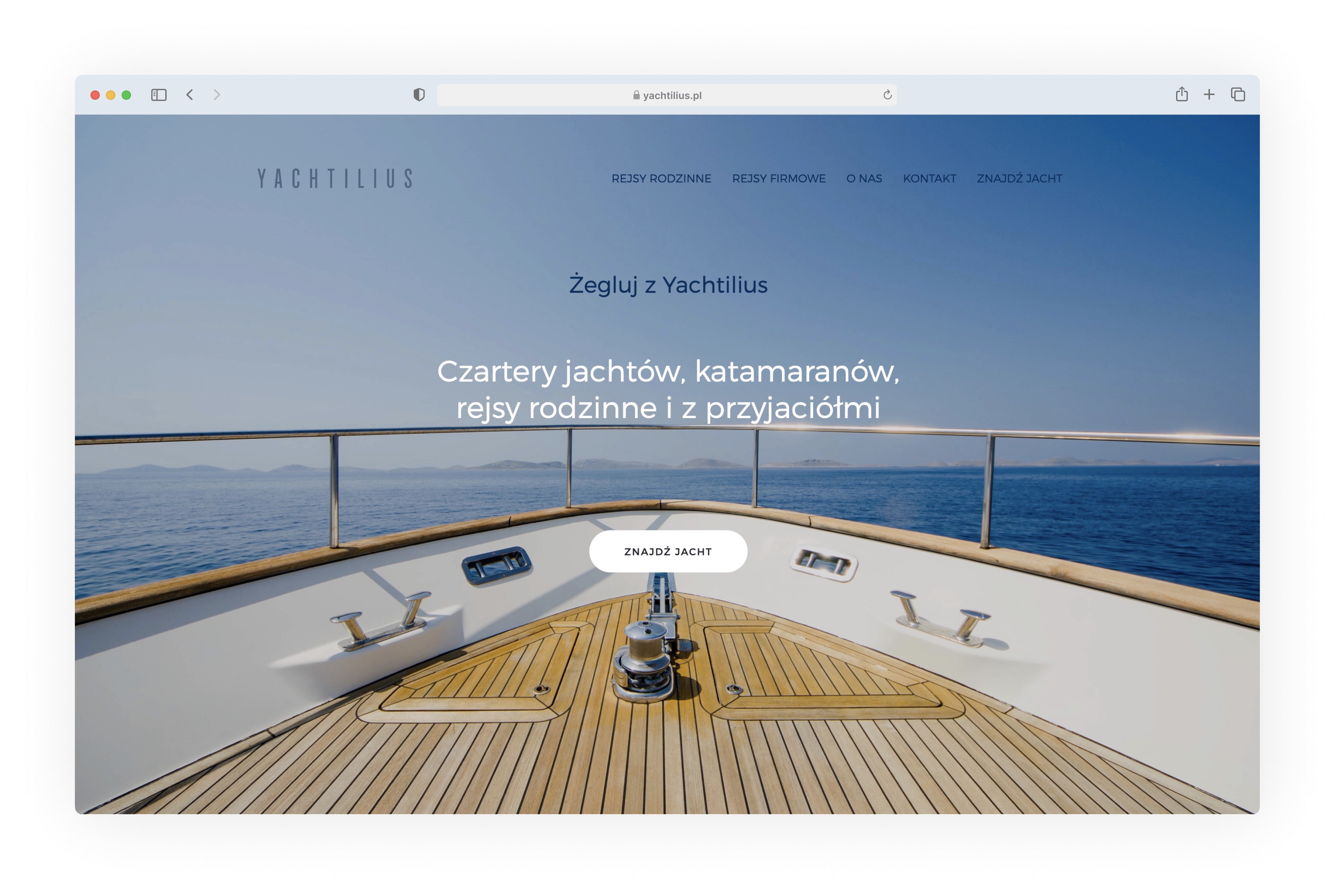
Landing page with hero image and destination tiles
Landing page hero and navigation
Destination tiles showcasing sailing regions
Destination tiles
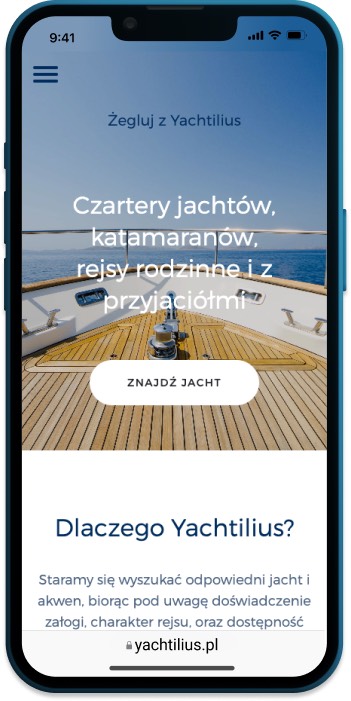
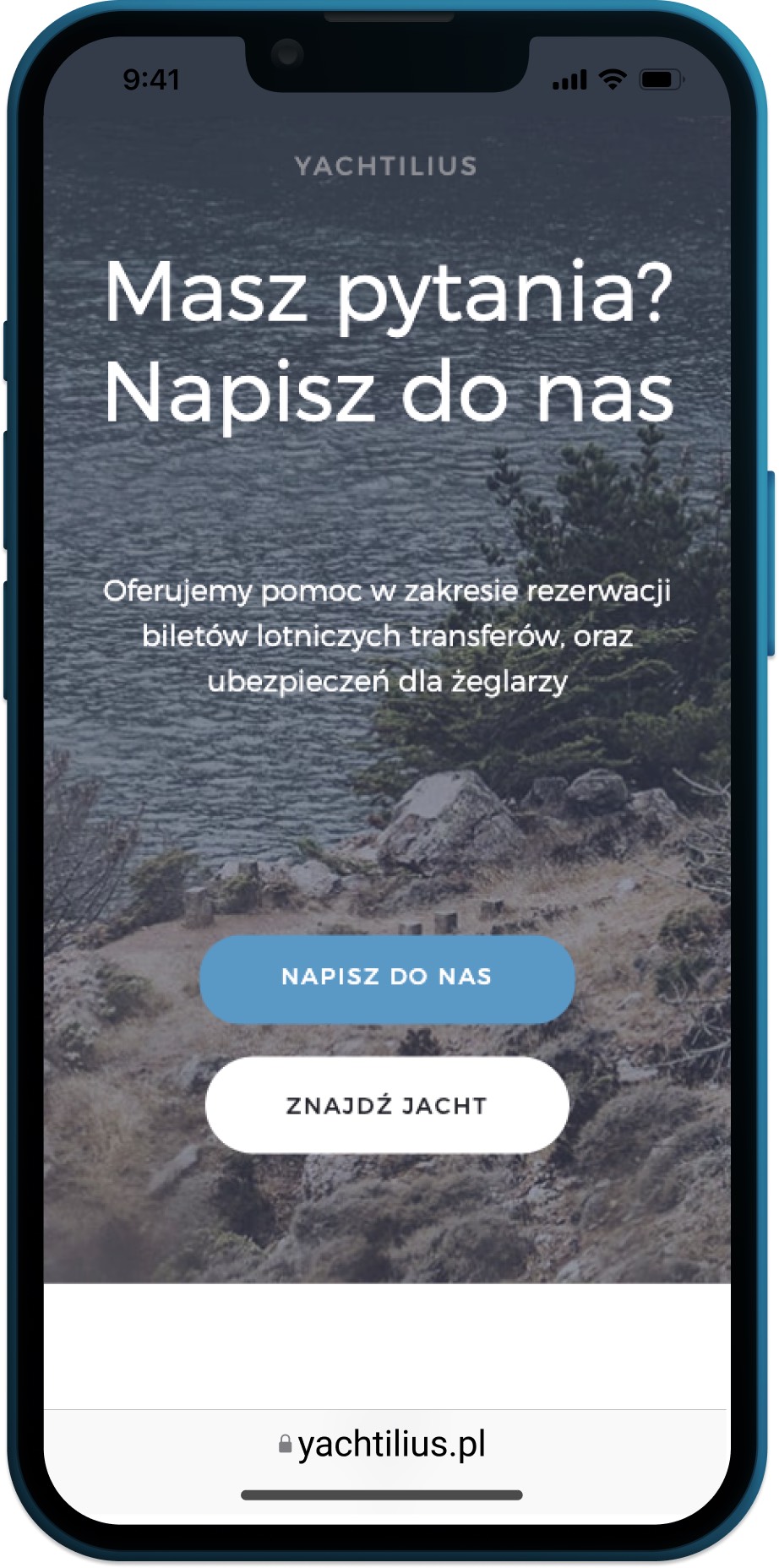
Mobile landing page hero
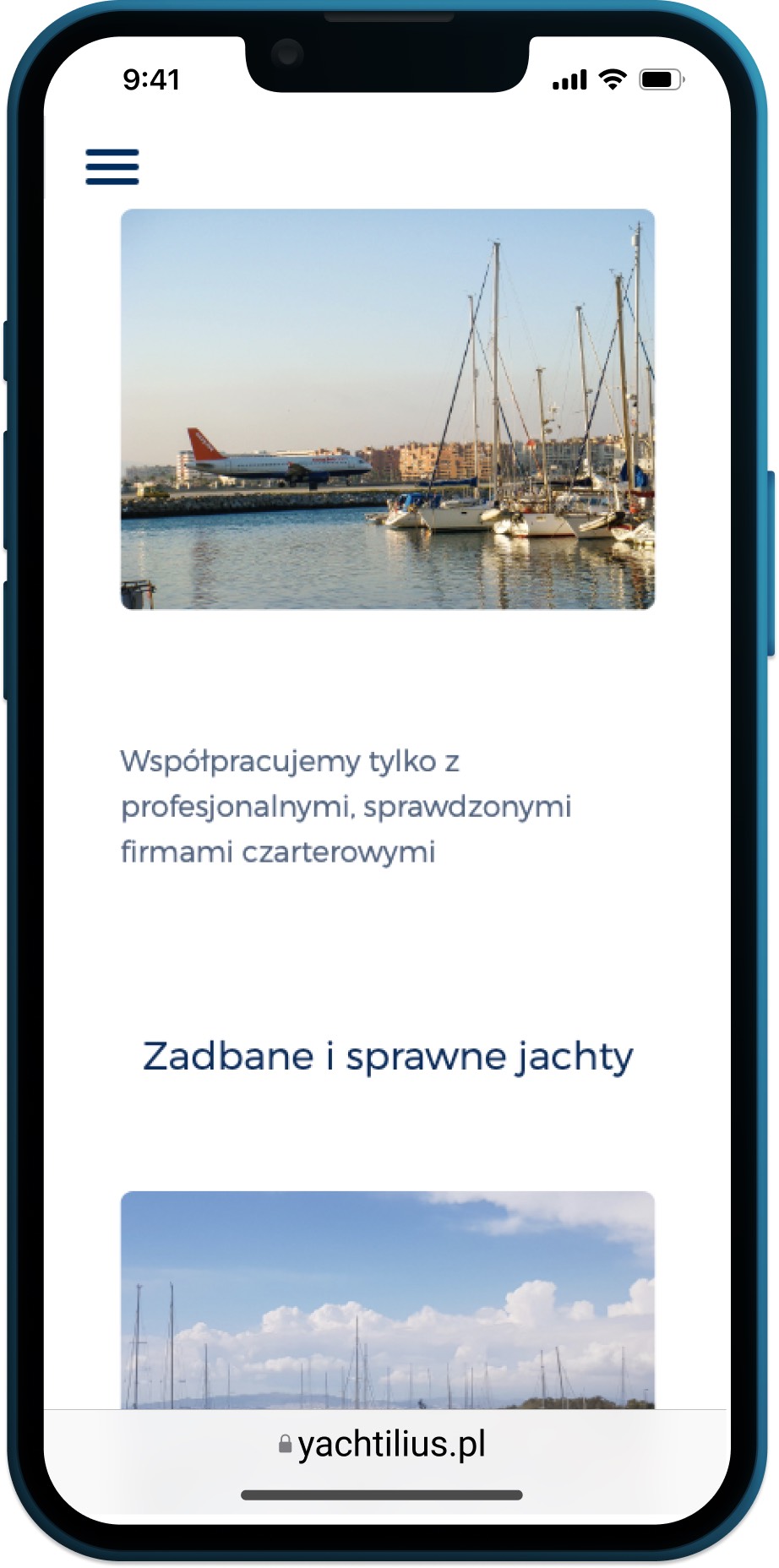
Mobile destination tiles view
Mobile landing page

Destination Pages

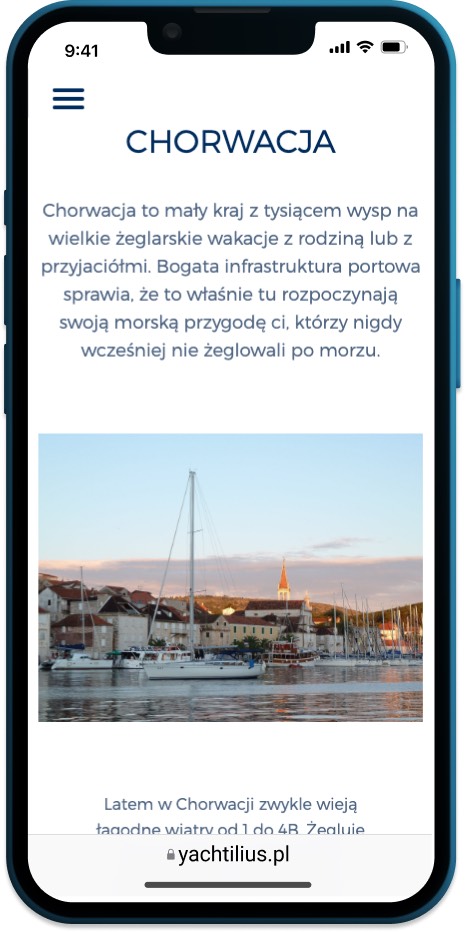
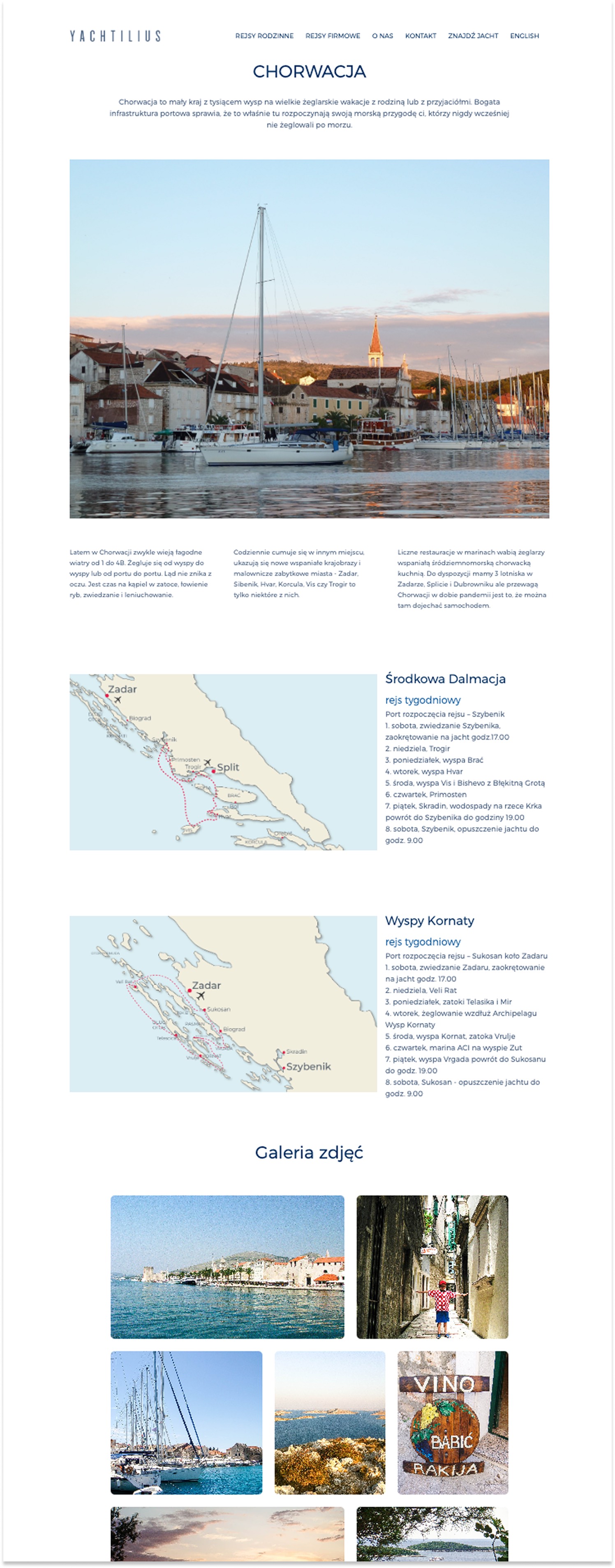
Each country page pairs sailing routes with local culture, cuisine, and attractions - giving first-time visitors enough context to picture the trip without a phone call.
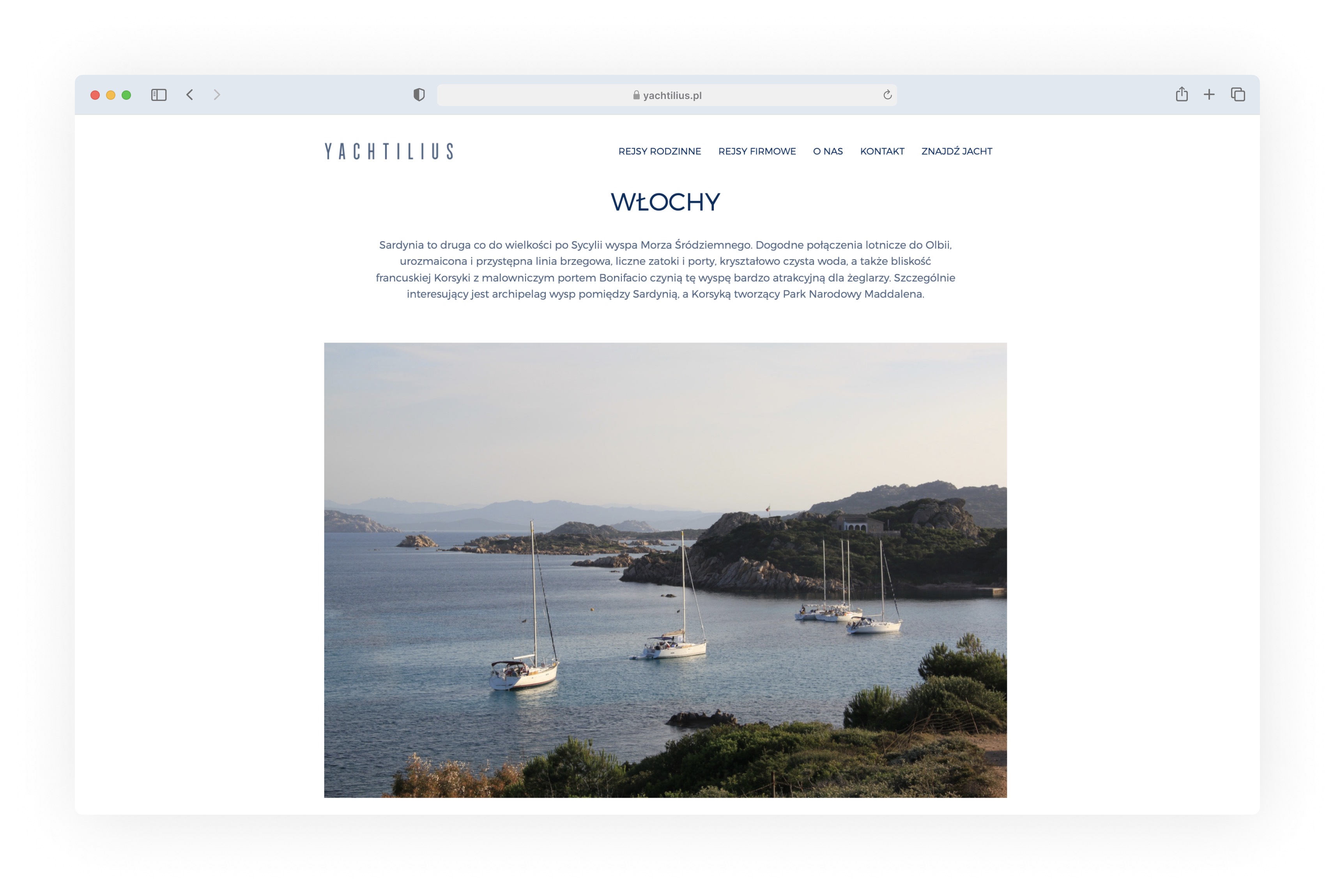
Italy country page with destination details
Italy destination page
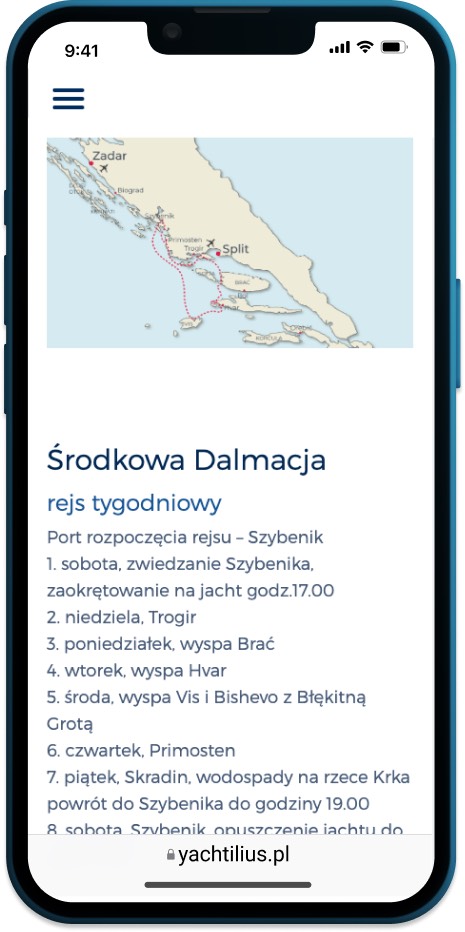
Day-by-day itineraries with interactive maps answer the "what does a trip look like" question upfront.
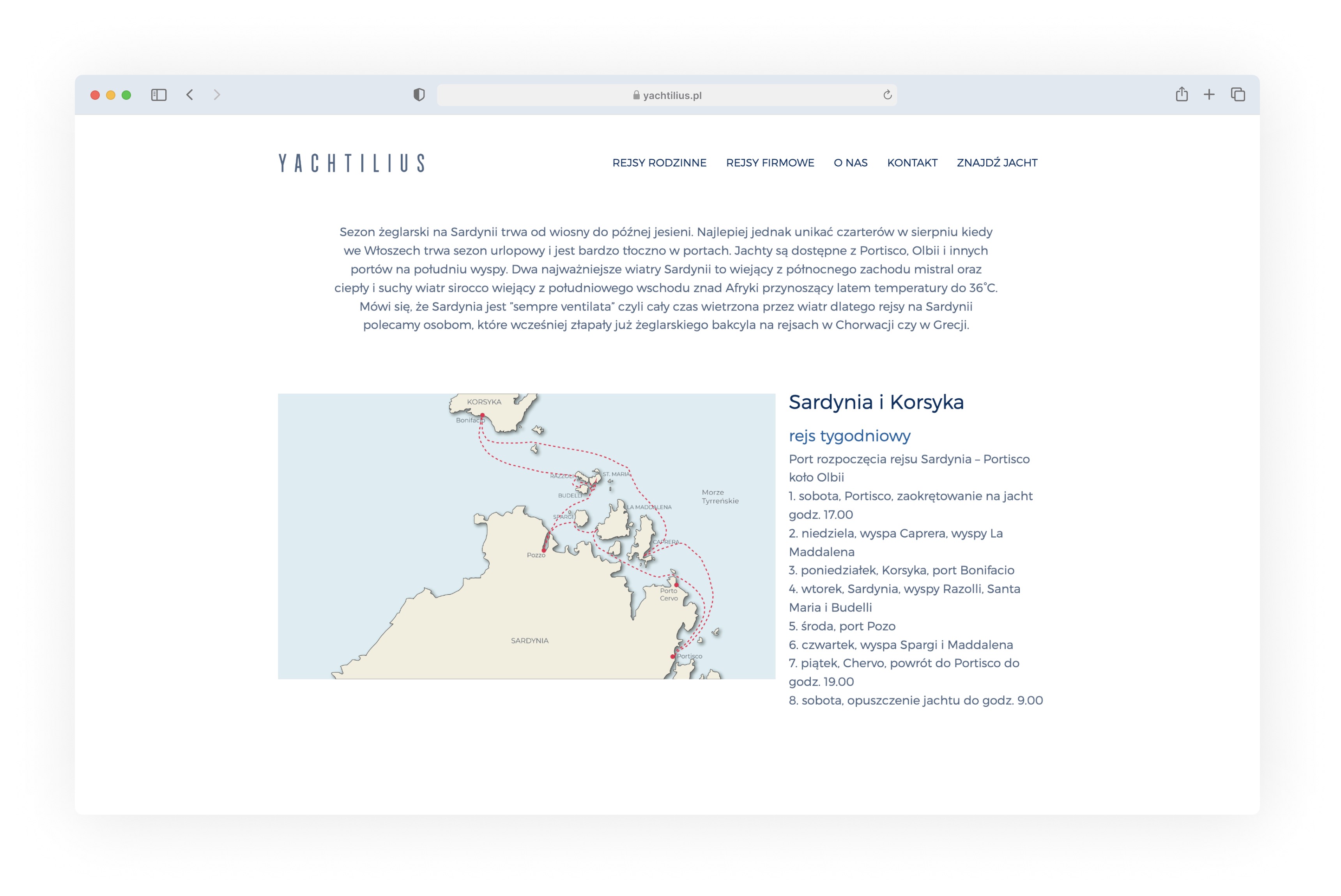
Tour route details with sailing map
Tour route with sailing map
Mobile country details view
Mobile tour itinerary view
Mobile destination and tour views

Supporting Pages

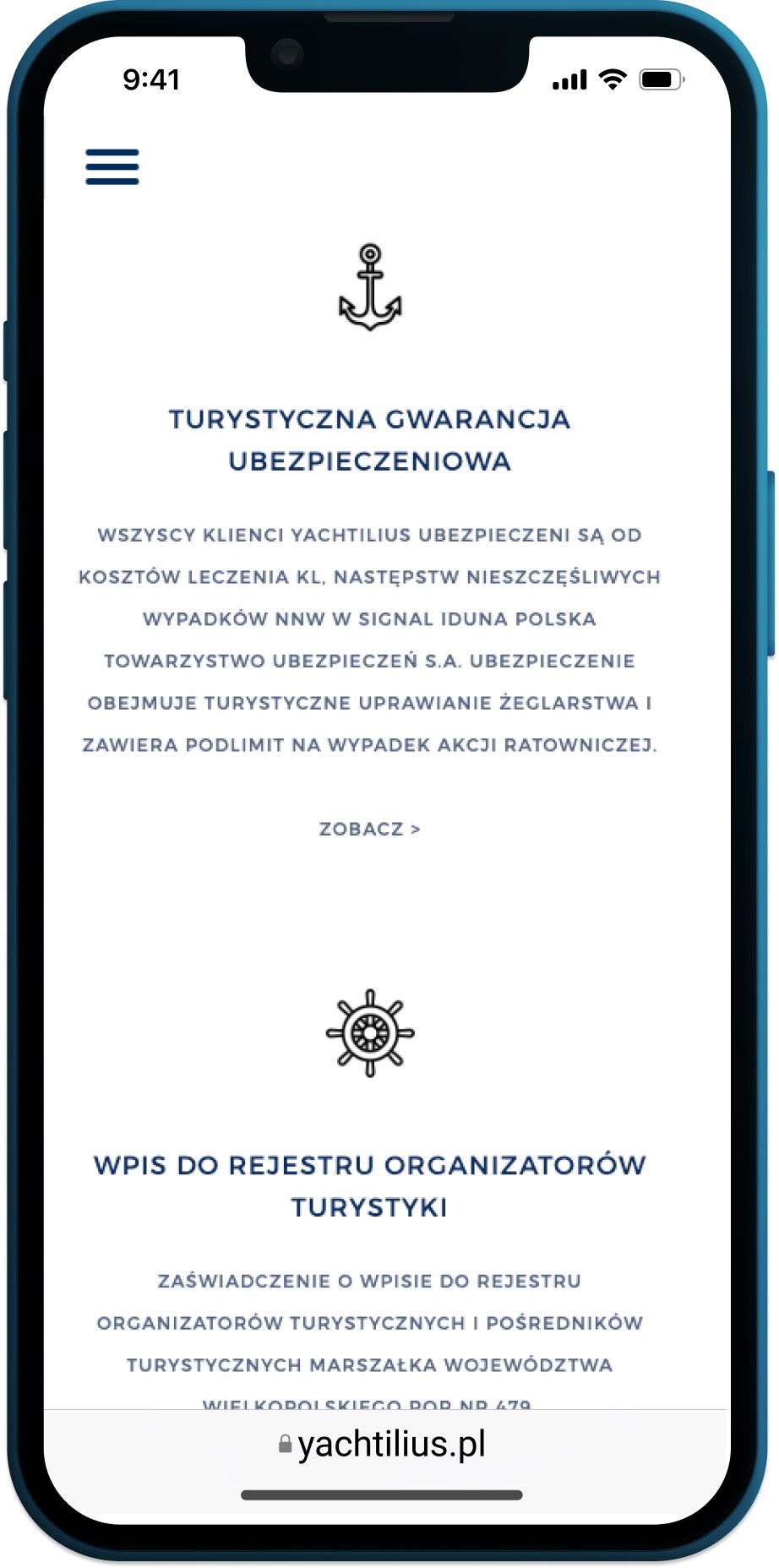
Clients often needed booking terms, payment details, and safety info before reaching out. Legal documents double as a tourist guarantee - required proof that the trip meets regulatory standards. This cut the back-and-forth the owner previously handled by email.
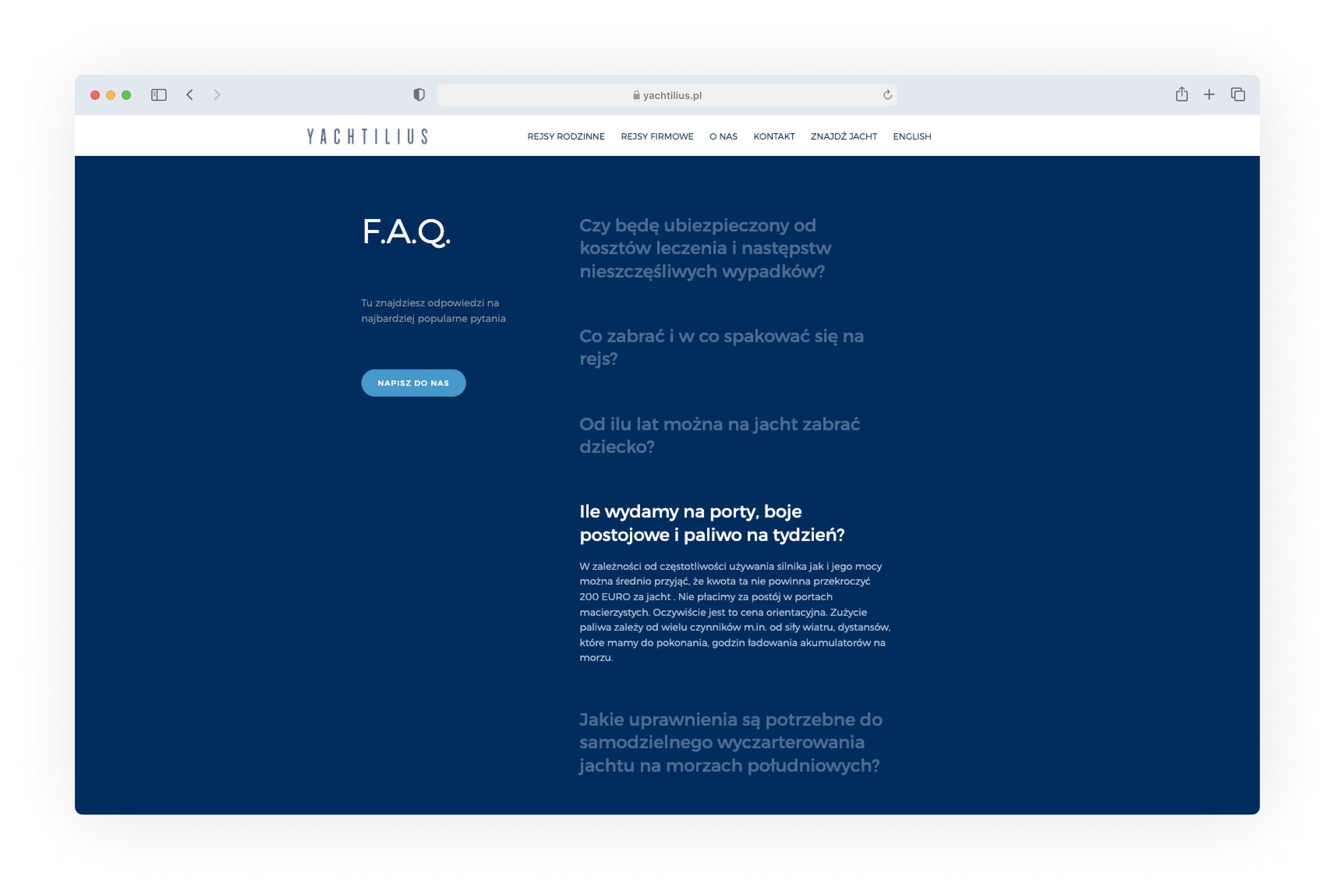
FAQ page with common client questions
FAQ section
Mobile FAQ page
Mobile legal documents and booking terms
FAQ and legal documents
The owner's local expertise - invisible online until now - deserved a dedicated space. Curated port recommendations surface that expertise directly on the site.
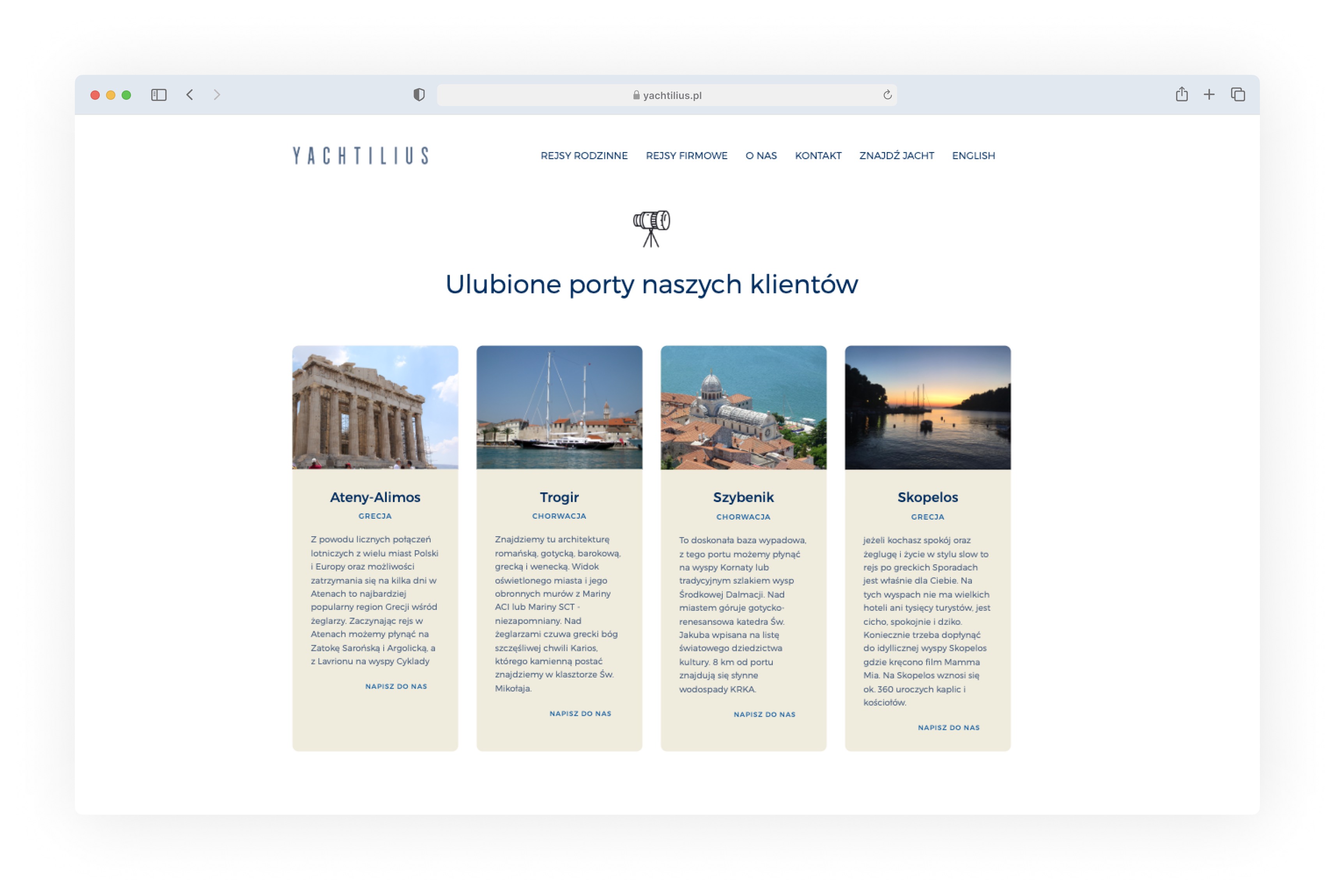
Favorite ports section with destination cards
Curated port highlights
Contact page with clear call-to-action
About page with trust signals
Contact and about pages
Brand Identity

The owner had no visual identity beyond a name - outdated logo, no consistent colors, no templates. I identified three brand attributes to build on: personal, trustworthy, and connected to the sea.
A lightweight design system - just enough for a single-product business - gives the owner a ready-to-use toolkit, from website to social media templates, maintained independently.
Navy
#002D5E
Ocean
#1760A0
Slate
#4E6582
Sage
#4A8060
Sand
#F0ECDD
Aa Montserrat Hairline · 200
Aa Montserrat Light · 300
Aa Montserrat Regular · 400
Aa Montserrat Bold · 600
Aa Montserrat Black · 700

Final Product

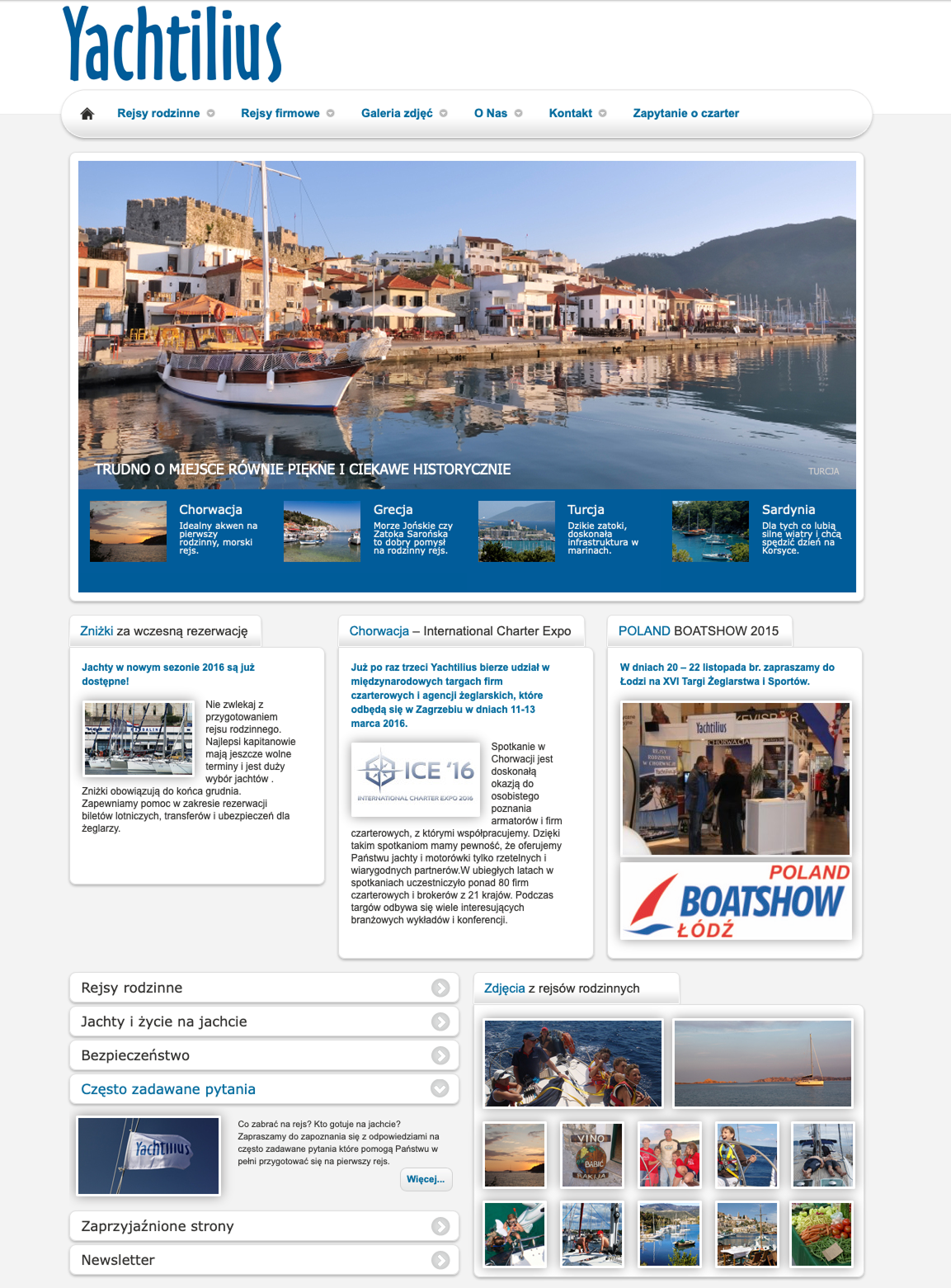
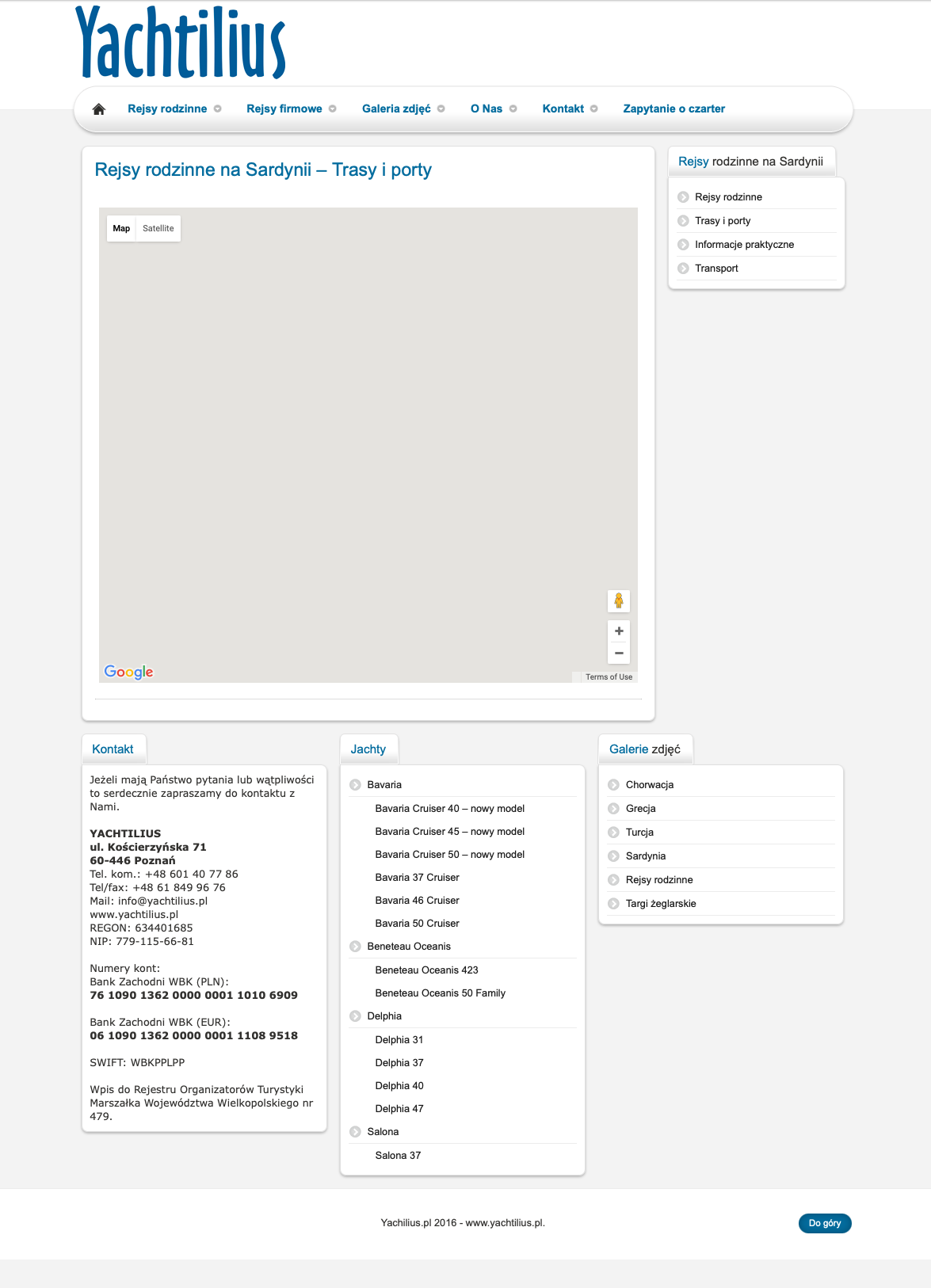
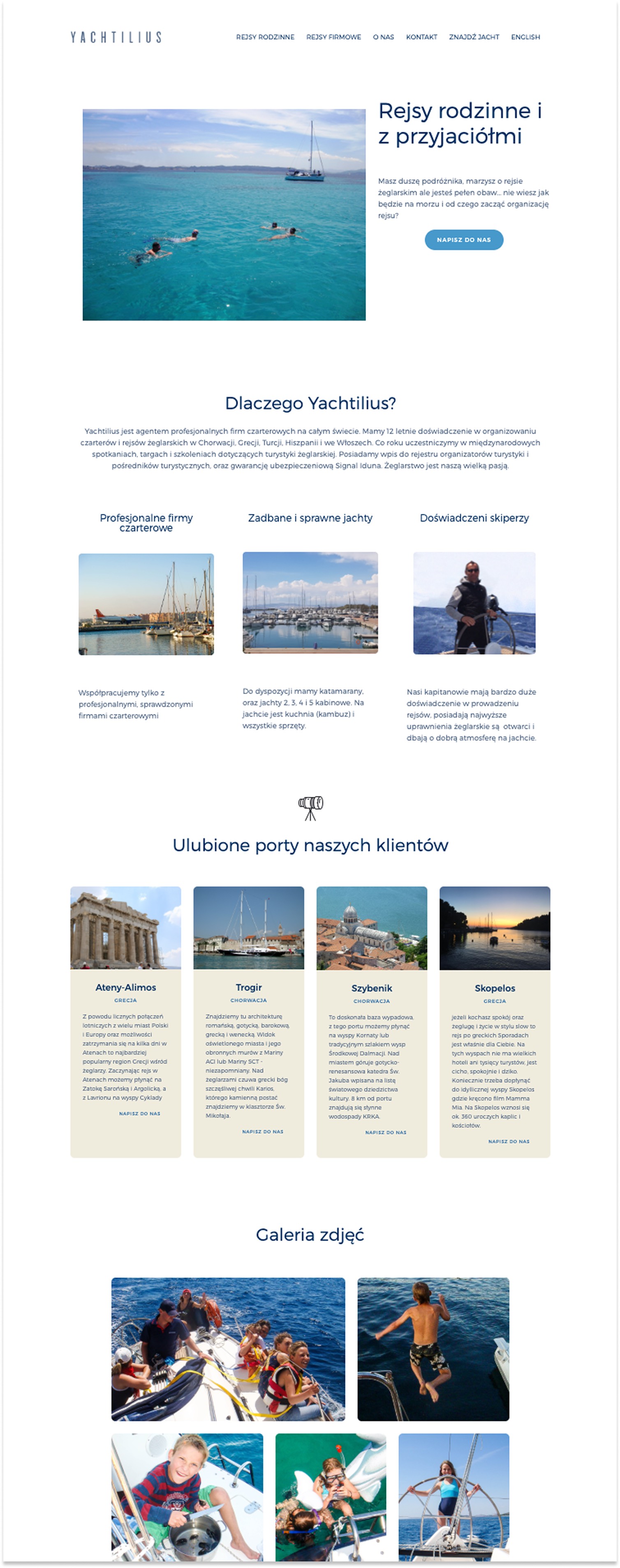
The original homepage was text-heavy with no clear hierarchy. The redesign leads with destination imagery and tile-based navigation.
Before Old homepage - 2016
After Redesigned landing page
Landing page comparison
Destination pages replaced a bare map embed with itineraries, local tips, and imagery.
Before Old route page - 2016
After Redesigned destination page
Destination pages comparison
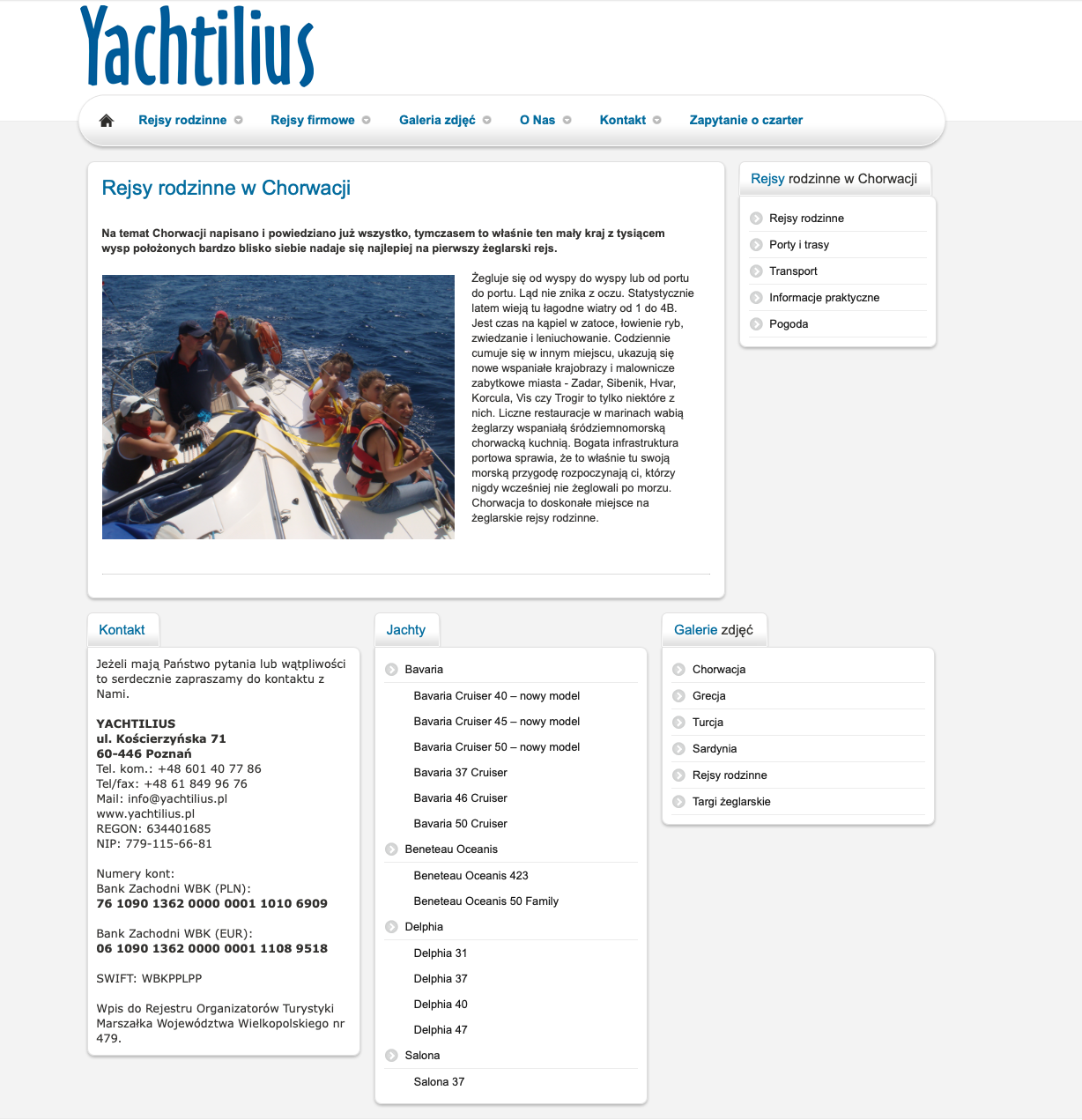
Trip type pages went from a plain list to content organized around the client’s perspective - what type of sailing suits them and what to expect.
Before Old supporting page - 2016
After Redesigned trip types page
Supporting page comparison

Outcomes & Reflection

Results
Launched September 2020 - still the company's primary client-facing channel. First contact now starts on the site instead of over email and phone.
Constraints & Tradeoffs
  • No online booking: budget didn’t allow a custom system, so I designed the site to funnel users toward direct contact, matching the owner’s relationship-driven sales approach
  • Yachtilius search uses a third-party solution with limited UI control - a pragmatic tradeoff for a one-person business
What I Learned
Framing every design review around business outcomes - not visual choices - kept a non-technical stakeholder aligned through the entire project.
What I Would Do Differently
Instrument analytics from day one - without data on which destinations drive the most contact, optimization was guesswork. And replace email-only contact with a simple booking form to lower the barrier.
See It Live
The redesigned site is live.

Explore more projects

User Research on AI Search
UX research study on how users navigate and search in AI-powered interfaces.
UX Research Usability Testing Survey Design Data Analysis
User Research on AI Search
Tile & Card Guidelines
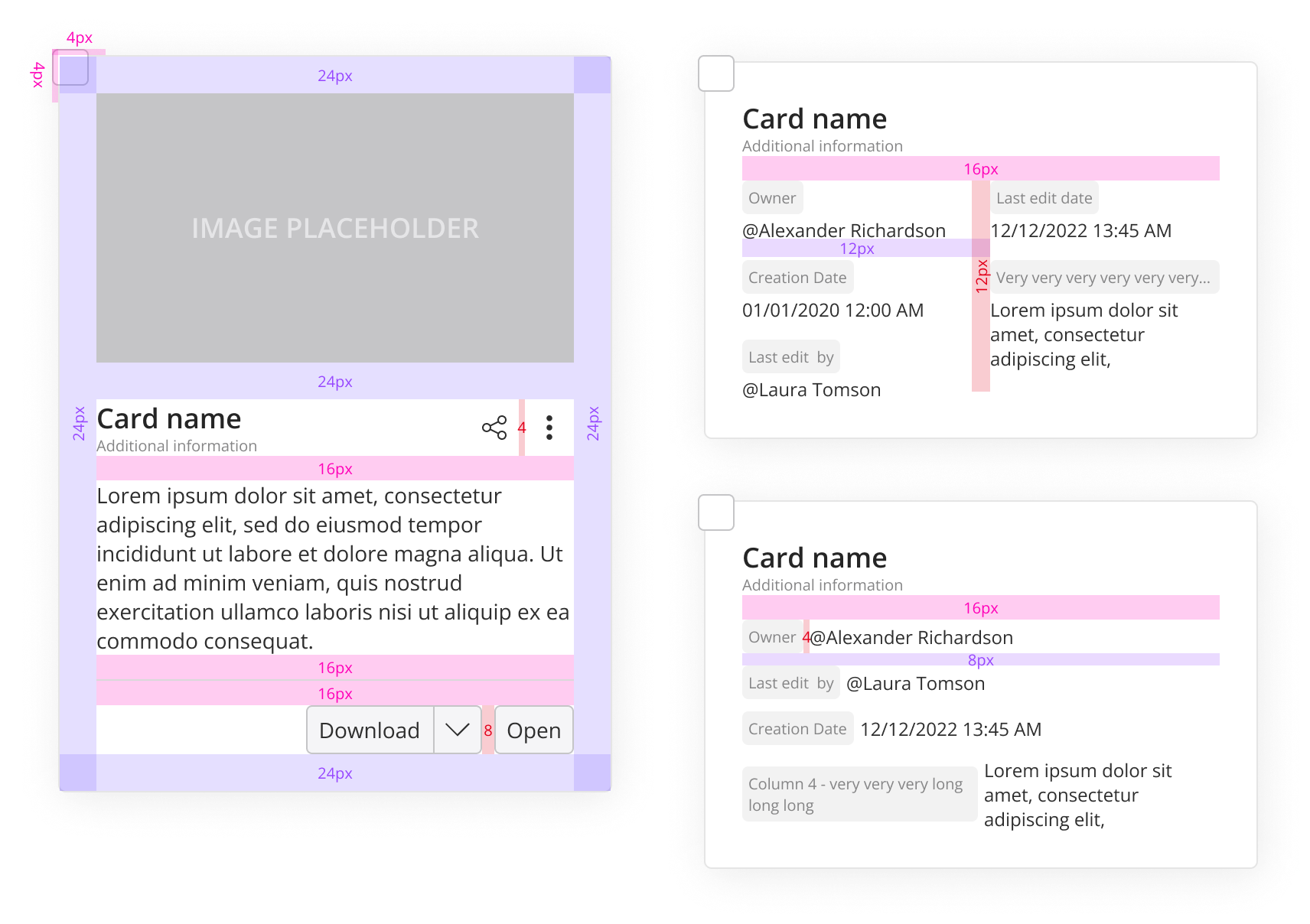
UX guidelines for tiles and cards in a design system
UI Design Design System
Tile & Card Guidelines
Investment Hub
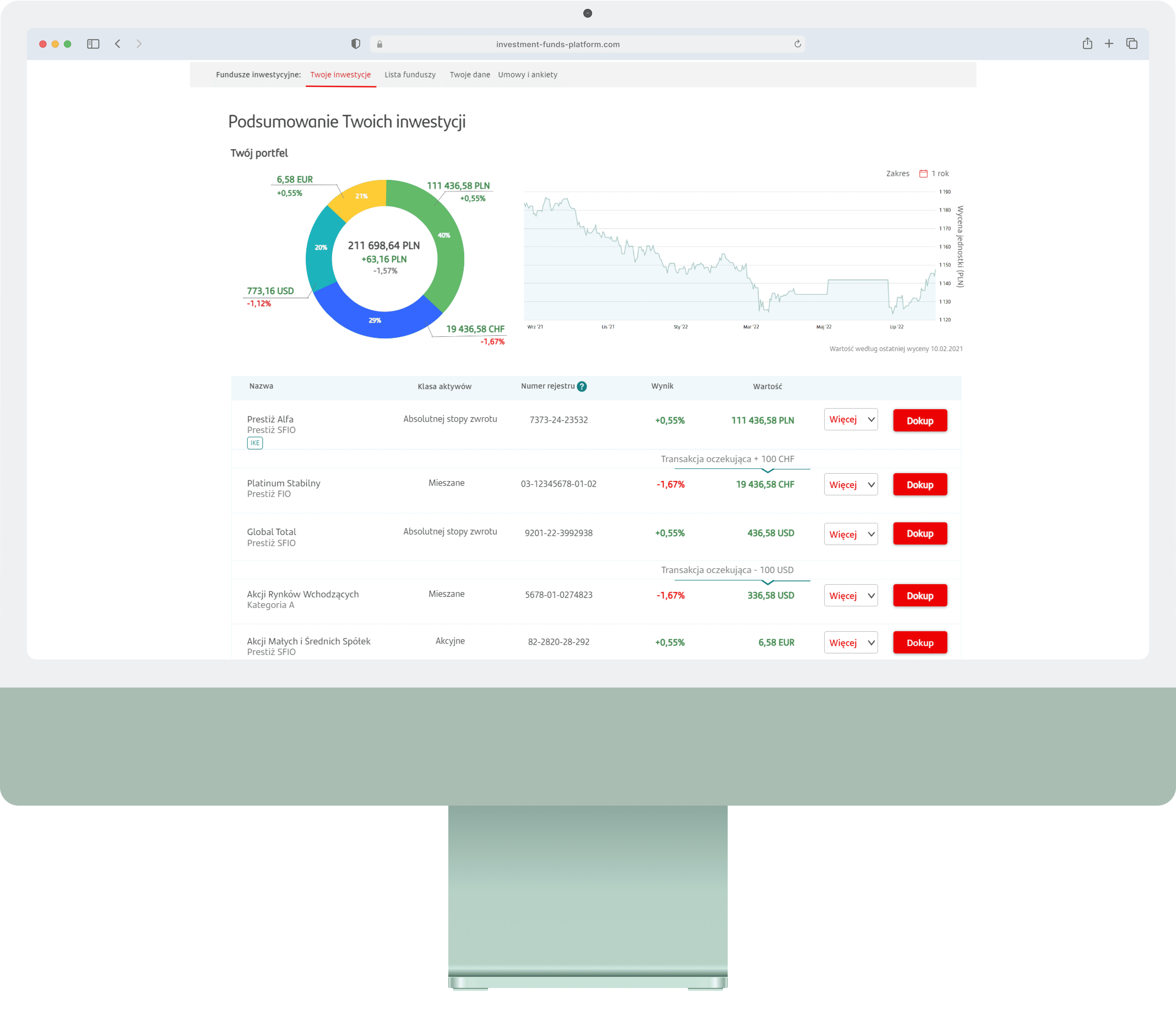
Making mutual fund investing simple for retail investors.
Research UX Design Prototyping Dev Handoff
Read case study
Investment Hub